

How can vegetables help with weight loss?
If you’re trying to lose weight, you don’t need to live on vegetables alone, and you shouldn’t. But eating more of them can be a great way to support a healthy eating plan.
“Non-starchy vegetables support an experience of feeling full after a healthy meal and add a bounty of various vitamins, minerals, and other micronutrients,” says dietitian Yulia Brockdorf.
They also have a low glycaemic index and glycaemic load, and they’re lower in kilojoules and carbohydrates. Vegetables tend to be nutrient-dense too, which means they pack plenty of goodness into relatively few kilojoules per serve. And let’s not forget the fibre factor.
Fibre takes longer for your body to digest, so it keeps you feeling fuller for longer. On top of that, many of these vegetables are among the most hydrating foods you can eat.
We asked dietitians to share the best vegetables for weight loss, along with how to eat them and why they deserve a place in your weekly meal plan.
1. Zucchini (courgette)
Whether you grow your own, buy them at the shops or a neighbour passes a bagful over the fence, zucchini might have you dreaming of a cheesy zucchini slice or a moist chocolate zucchini cake. But there are healthier ways to enjoy them that are just as delicious.
Zucchini noodles, or ‘zoodles’, are a great swap for refined pasta. They’re lower in kilojoules and naturally gluten-free, says dietitian Kristine van Workum.
One medium zucchini (skin on) contains around 140 kilojoules (33 calories), two grams of fibre and a good dose of vitamin C.
You don’t have to give up pasta altogether, either. “I often say, what do you want more: a piece of Italian bread or the pasta? It’s kind of all or nothing for many people, which can lead to inconsistency and stress,” she says.
2. Cauliflower
Next time you’re craving starchy potatoes or white rice, reach for a cauliflower instead.
You can turn cauliflower into a pizza base or cauliflower rice, or swap it for half the potatoes in your mash, says Van Workum.
Making the switch saves kilojoules and carbs, and helps you reach your daily fibre target, which is why it’s one of the best vegetables for weight loss. Half a cup of cooked white rice, for example, has about 420 kilojoules (100 calories), 23 grams of carbs and next to no fibre. A whole cup of cauliflower, on the other hand, has only five grams of carbs, around 115 kilojoules (27 calories) and two grams of fibre. Cauliflower is also rich in vitamin C, vitamin K and folate.
Check out this delicious Cauliflower cheese soup
3. Brussels sprouts
Brussels sprouts are having a moment, popping up on restaurant menus as crispy, roasted share plates. That’s exactly how dietitian Melissa Majumdar likes to eat them.
“A little bit of olive oil, salt, and pepper goes a long way with Brussels sprouts, and make a great side to some grilled fish,” says Majumdar. Taste aside, they’re a hearty, filling vegetable, says Van Workum, at only about 160 kilojoules (38 calories) a cup.
“As cruciferous vegetables, they are liked [for] helping decrease inflammation,” adds Van Workum. They also provide a range of vitamins and minerals, plus some omega-3 fatty acids.
4. Jicama
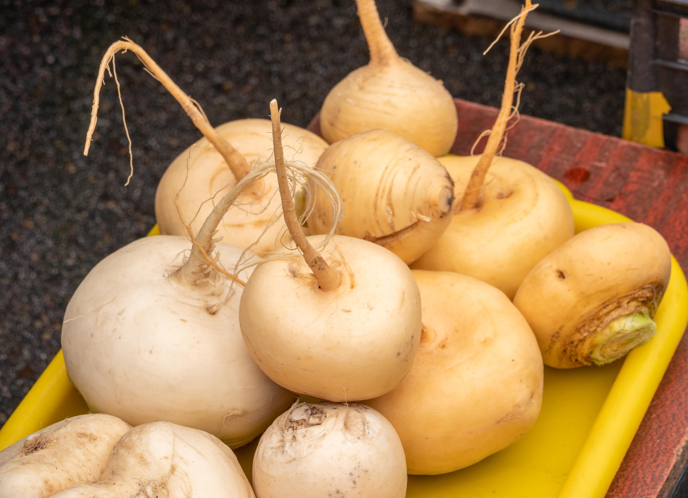
It’s hard to beat the satisfying crunch of jicama. Sometimes sold as yam bean, it’s worth hunting down at Asian grocers. It really makes you feel like you’re eating something hearty and filling.
Jicama is about 90 per cent water, and one cup of sliced jicama contains around 190 kilojoules (46 calories) and a generous six grams of fibre. It’s also an excellent source of inulin, a type of fibre that feeds healthy gut bacteria.
“Jicama supports weight loss and helps with improved insulin sensitivity and is an outstanding low-calorie snack,” says Brockdorf.
She likes to eat it sprinkled with paprika and a squeeze of lime juice instead of chips. Majumdar suggests adding jicama to salads and coleslaw for extra crunch, or dipping it in guacamole.
5. Beetroot
No kidding: beetroot could help curb your sweet tooth. It’s a naturally sweet root vegetable that’s often overlooked beyond its starring role on an Aussie or Kiwi burger, which is surprising given its weight-loss and health benefits. It may even give your workouts a boost.
“There’s been some research on beets and athletic performance,” says Van Workum. According to a review in the journal Nutrients, the nitrates in beetroot can improve endurance, and it’s also high in antioxidants.
Although beetroot is considered a starchy vegetable, it still has about seven grams fewer carbs than potato, and half a cup contains just 160 kilojoules (38 calories). Buy it fresh, or save time with the pre-cooked vacuum-packed kind from the fruit and veg section. Roasting brings out its natural sweetness, so it’s delicious on its own. Or toss it through mixed salad leaves with a little goat’s cheese, walnuts and a vinaigrette.
If you’re prone to kidney stones, check with your doctor before eating a lot of beetroot, as it’s high in oxalates.
6. Mushrooms
Want to trim the fat and kilojoules from family favourites like spag bol, tacos and burgers? Skip the meat fridge and head to the fruit and veg section for some mushrooms.
“They’re one of the few veggies that exhibit umami, that savoury taste sensation, so they can be exchanged for some meat items, the way a portobello cap can be exchanged for a beef patty in a hamburger,” says Van Workum.
That savoury flavour makes mushrooms an easy addition to your meals and one of the best vegetables for weight loss. To compare, a cup of Swiss brown mushrooms has about 80 kilojoules (19 calories), while a cup of lean beef mince has around 900 kilojoules (215 calories). You can even make mushroom jerky to pack for your next bushwalk or tramp.
7. Cucumber
If you want more fibre, vitamin K and potassium, put the peeler away. Cucumber is one of those vegetables best eaten with the skin on.
Of course, you can stick with the classics and dunk cucumber in hummus or toss it through a salad. But why not get more creative? Brockdorf uses cucumber instead of bread for sandwiches. Leave the skin on so your cucumber ‘bread’ is sturdier, slice it lengthways and fill with lean sliced meat and/or extra veggies.
Or try a cucumber and fruit salad. “Think red onion slivers, cucumber, tomatoes, and peaches tossed with red wine vinegar, salt, pepper, and a little olive oil,” says Majumdar. While you’re slicing, save a few rounds to pop in a jug of water in the fridge for a refreshing drink.
8. Radishes
Radishes have far more to offer than being carved into a pretty garnish.
For starters, they’re very low in kilojoules, at around 75 kilojoules (18 calories) a cup, with about two grams of fibre and a little vitamin C. They may also give your metabolic health a helping hand. “Radishes enhance the production of a peptide called adiponectin that modulates glucose and fatty acid regulation,” says Brockdorf. According to the International Journal of Molecular Sciences, studies suggest low adiponectin levels may contribute to obesity, type 2 diabetes and heart disease.
Add them to salads, dip them in hummus or bake them into savoury veggie chips.
9. Spinach
A generous pile of spinach is a lunchtime staple for Majumdar. She likes to stir a cup of it through leftovers, layer it in sandwiches or toss it into a salad with strips of red capsicum and slivered almonds.
Add a handful to lasagne or scrambled eggs to boost your veggie count for the day. A heaped cup of raw spinach has only about 30 kilojoules (7 calories).
As well as the taste, she eats it for magnesium, potassium, B vitamins and vitamin K, which is essential for blood clotting. If you take blood-thinning medication, though, Brockdorf advises checking with your doctor before eating large amounts of spinach.
Here’s another bonus: spinach is high in insoluble fibre, which absorbs water and adds bulk, so it can help keep you regular.
10. Eggplant
Its glossy purple skin isn’t the only thing eggplant has going for it. Its secret weight-loss weapon is its versatility, making it a tasty swap for higher-kilojoule foods.
“They’re kind of like a meaty texture, like a portabella or eggplant steak,” says Van Workum.
That meaty texture makes eggplant a great stand-in for meat in many dishes, cutting kilojoules and saturated fat. And with only around 85 kilojoules (20 calories) and about three grams of fibre per cup, you can eat more and feel fuller.
If you’re new to eggplant, start simple. “Roast and blend eggplant into baba ganoush and use it in place of mayonnaise,” says Van Workum. It also makes a thick, delicious dip for veggie sticks.
11. Bitter greens
If you’re not a fan of bitter greens, they may deserve a second chance. These leafy greens are rich in iron and let you bulk up your plate for very few kilojoules, says Van Workum.
Bitter greens such as kale, watercress, rocket and silverbeet are ideal in smoothies, soups, pasta dishes and stir-fries.
Because they wilt and shrink when cooked, you can throw in handfuls to bulk up almost any meal. At the same time, you’ll get plenty of vitamins, minerals and antioxidants, and even a little protein.
One cup of raw kale has an impressive two grams of protein and about 140 kilojoules (33 calories). Because it cooks down so much, you can add three cups and still stay under 420 kilojoules (100 calories).
Now you know the best vegetables for weight loss, it’s time to fill up your trolley and your plate.