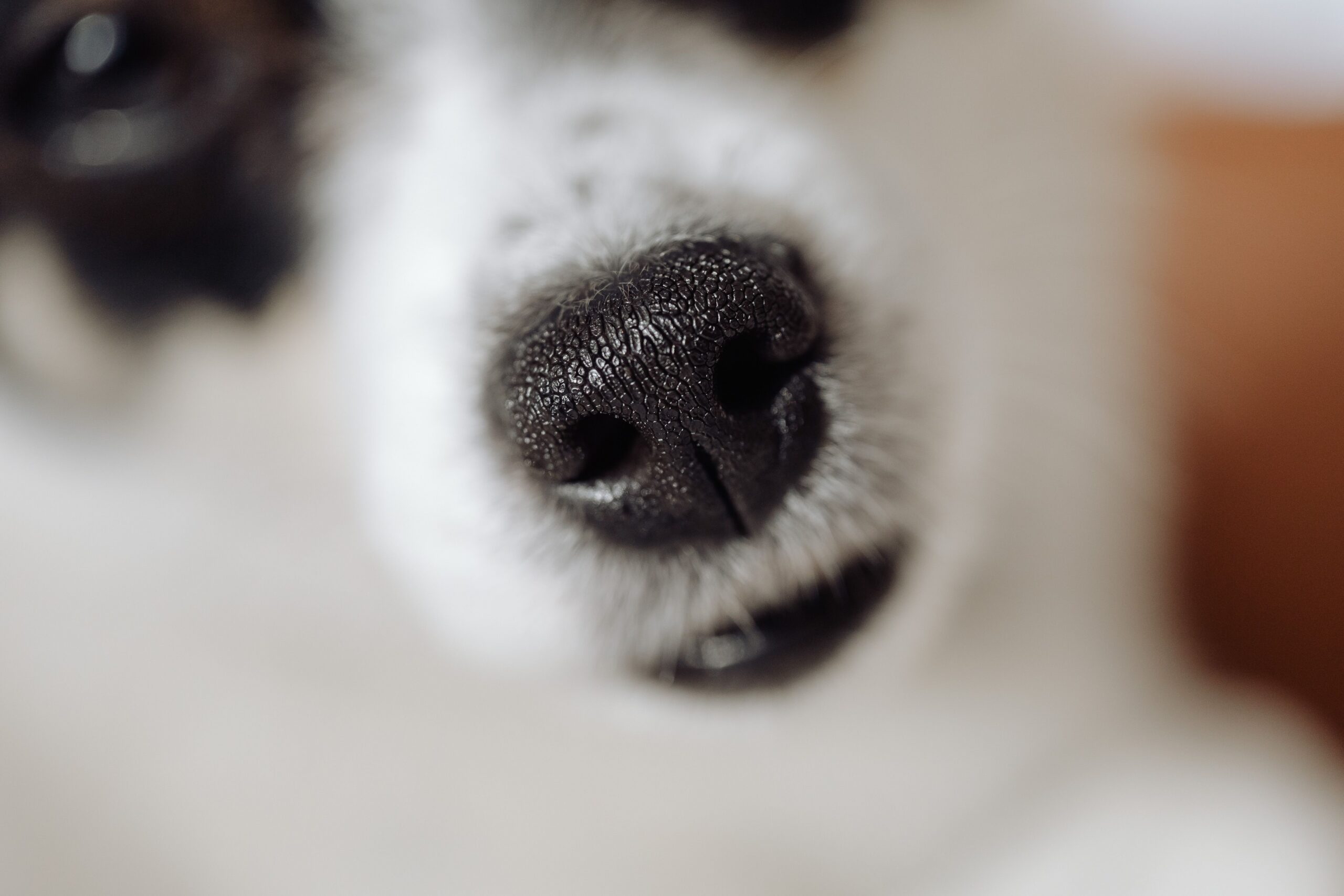


A handful of footsteps tells them which way you went
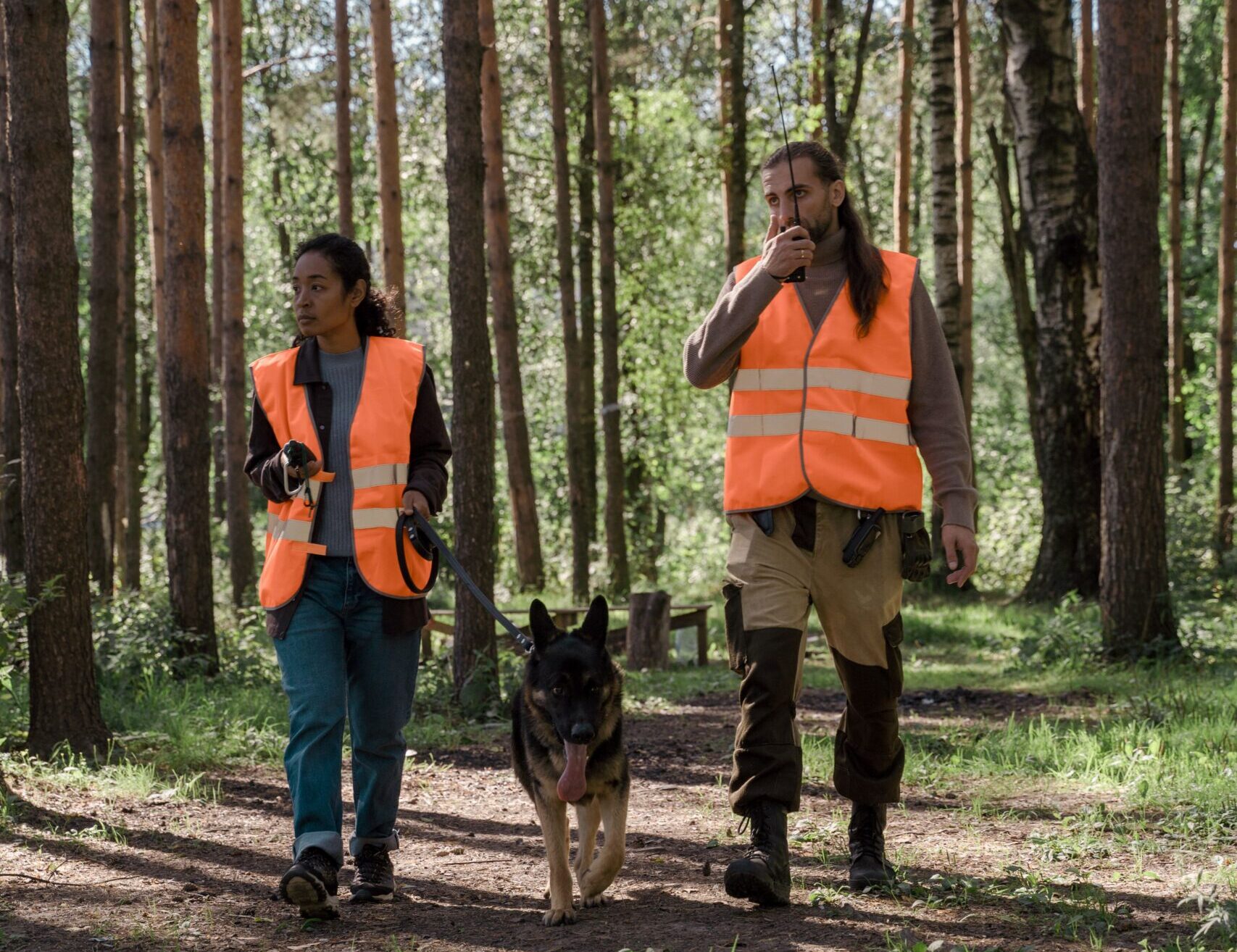
Cross a scent trail at a right angle and a well-trained tracking dog can still work out which direction the person was heading—even if that person was walking backward. In a classic experiment, researchers laid a trail one footprint at a time across individual carpet squares, then trimmed the number of steps the dog was allowed to sample. Five footsteps were enough for the dogs to call the direction correctly. Three were not. The dogs were reading the faint, second-by-second fading of scent from one print to the next. (One caveat: this sharpness applies to trained dogs; the family pet isn’t necessarily this precise.)
Their eyes are built for the dark
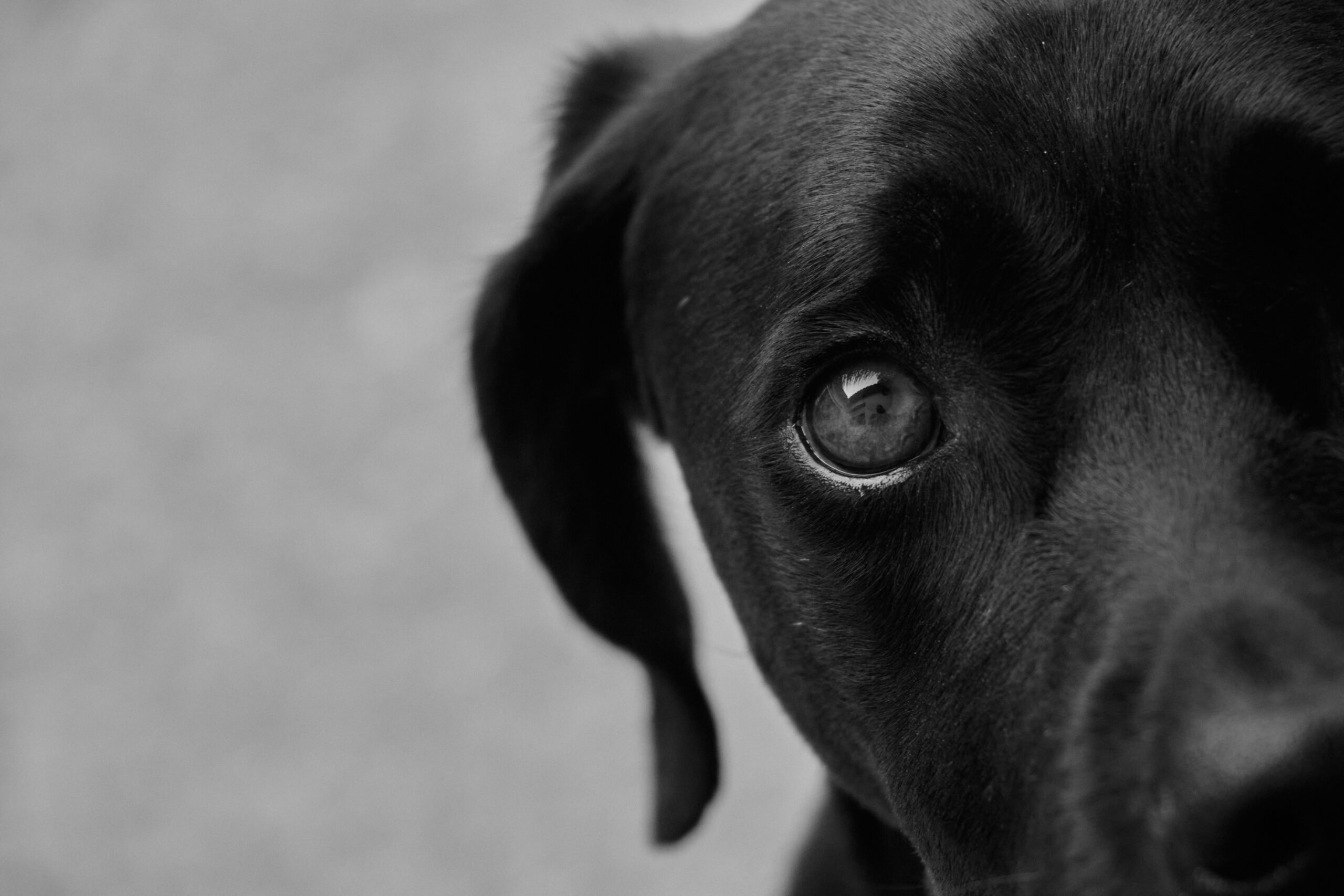
Dogs see in dim light far better than we do, and it comes down to hardware. Their corneas and lenses curve more steeply, gathering more light. Their pupils widen further than ours. Their retinas are packed mostly with rod cells, the receptors built for low light, rather than the cone-heavy patches our bright-light vision depends on. And they carry one part we lack entirely: a mirror-like layer behind the retina called the tapetum, which bounces stray light back through the eye for a second pass. It’s also why their eyes flash green or gold in a camera flash.
They carry a built-in compass
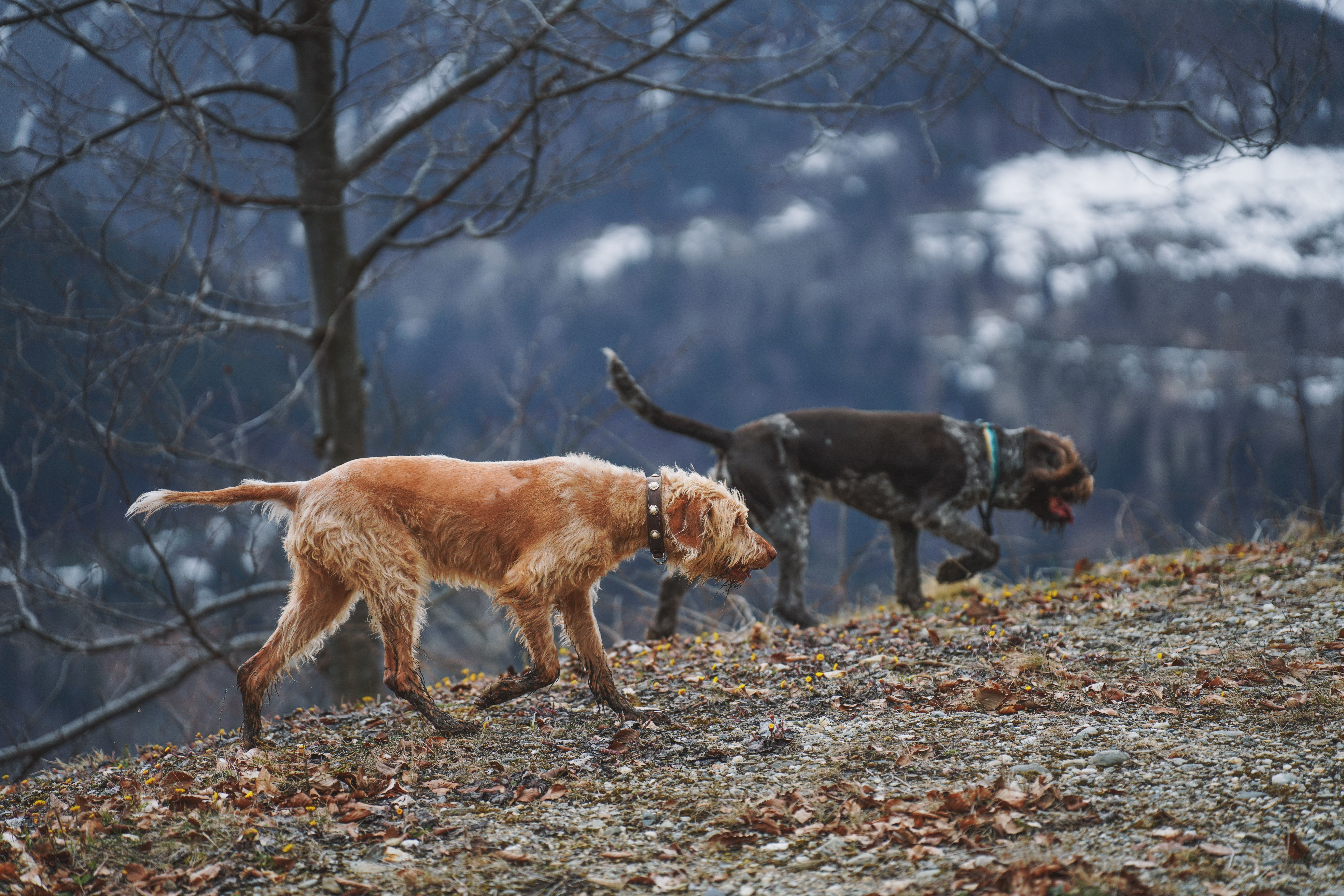
In a 2020 study, Czech researchers strapped GPS units and cameras to hunting dogs and watched how they found their way back after roaming deep into unfamiliar forest. Many didn’t simply retrace their steps—they invented shortcuts. And just before setting off on those new routes, the dogs paused to trot a short stretch along a north-south line, as if checking a compass. Researchers think they’re sensing Earth’s magnetic field. Earlier work from the same group even found dogs tend to line up north-south when they relieve themselves, which may help explain all that circling before they settle on a spot.